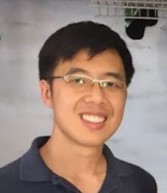
I am an assistant professor at the Department of English, Linguistics and Theatre Studies at the National University of Singapore. I currently serve on the editorial board of the Journal of East Asian Linguistics and First Language.
Email me at either:
- znhuang at nus dot edu dot sg, or
- znhuang at terpmail dot umd dot edu
Recent updates (September 2026)
- Looking forward to attending and presenting on Colloquial Singapore English at FOSS-16!
- Now available: Young Singaporean English: Current Developments in CSE Morphosyntax in a Digital World (Cambridge University Press, open access). This co-authored “Elements” (short book) discusses a number recent developments in the lexicon and grammar in Colloquial Singapore English, documenting continued influence from adstrate languages such as Chinese “dialects” and Malay.
- Excited to join the editorial board of First Language!
- Now available online in Natural Language and Linguistic Theory: “The role of phases and specificity in definite islands”, co-authored with Zheng Shen. This paper presents experiments on definite NP islands. We show that the acceptability profiles of these islands differ between a wh-movement language (English) and a wh-in situ language (Mandarin Chinese), and show how two competing accounts of these islands can be combined to provide a more complete picture.
What I do
I am a linguist interested in understanding the relation between linguistic experience, sentence processing, and grammatical rules and what that relation might mean for our theories of language and the mind. More specifically, I’m interested in questions like:
- How do children make use of what is spoken around them to figure out the grammatical rules of their native languages?
- How are adults apply these rules in production and comprehension?
- But a more basic question: what are these grammatical rules? And what are the facts like for production and comprehension?
On a day-to-day basis, I develop more precise descriptions of linguistic knowledge and behaviour (Question 3), often taking a cross-linguistic perspective and using formal experiments. Addressing this question sets the stage for addressing Questions 1 and 2, which I tackle with a combination of corpus analyses, computational models, and experiments.
Finally, as someone who grew up in a multilingual environment in Singapore, I am also interested in dialectal variation and language contact, especially Singapore English.
Some specific topics that I have worked on:
- cross-linguistic differences in the syntax and meaning of attitude verbs, such as “think”, “want”, “know”, and how children might learn what the facts are for these verbs in their native languages.
- the syntax, pragmatics, and psycholinguistics of long-distance dependencies (e.g. wh-questions), which again involve attitude verbs.
- cross-linguistic differences in whether ungrammatical sentences sound bad or surprisingly OK (i.e. “grammaticality illusions”).
- Singapore English and how certain aspects of its grammar might be traced (or not!) to adstrate languages like English, Chinese, and Malay varieties.
My CV can be found here.
Collaboration and supervision
NUS is an exciting place for doing linguistics (especially languages of East and Southeast Asia), with lab facilities, corpora, and a community of like-minded faculty and students. Please get in touch if you are interested.